01 / 2024Rakata
FULL TRACK
MUSIC THAT HITS.
MUSIC THAT STAYS.
SELECTED SIGNALS / 2018—2026
A microtonal exploration of what exists between recognition and invention.
A research-creation project combining a personal 24-tone system, composition, manifesto and a reflection on the experience of listening.
“My music reflects the way I listen: eclectically. Sometimes it’s built for the club, sometimes it’s trance to cry to after a breakup, and sometimes it’s techno for turning inward.”— umbraid
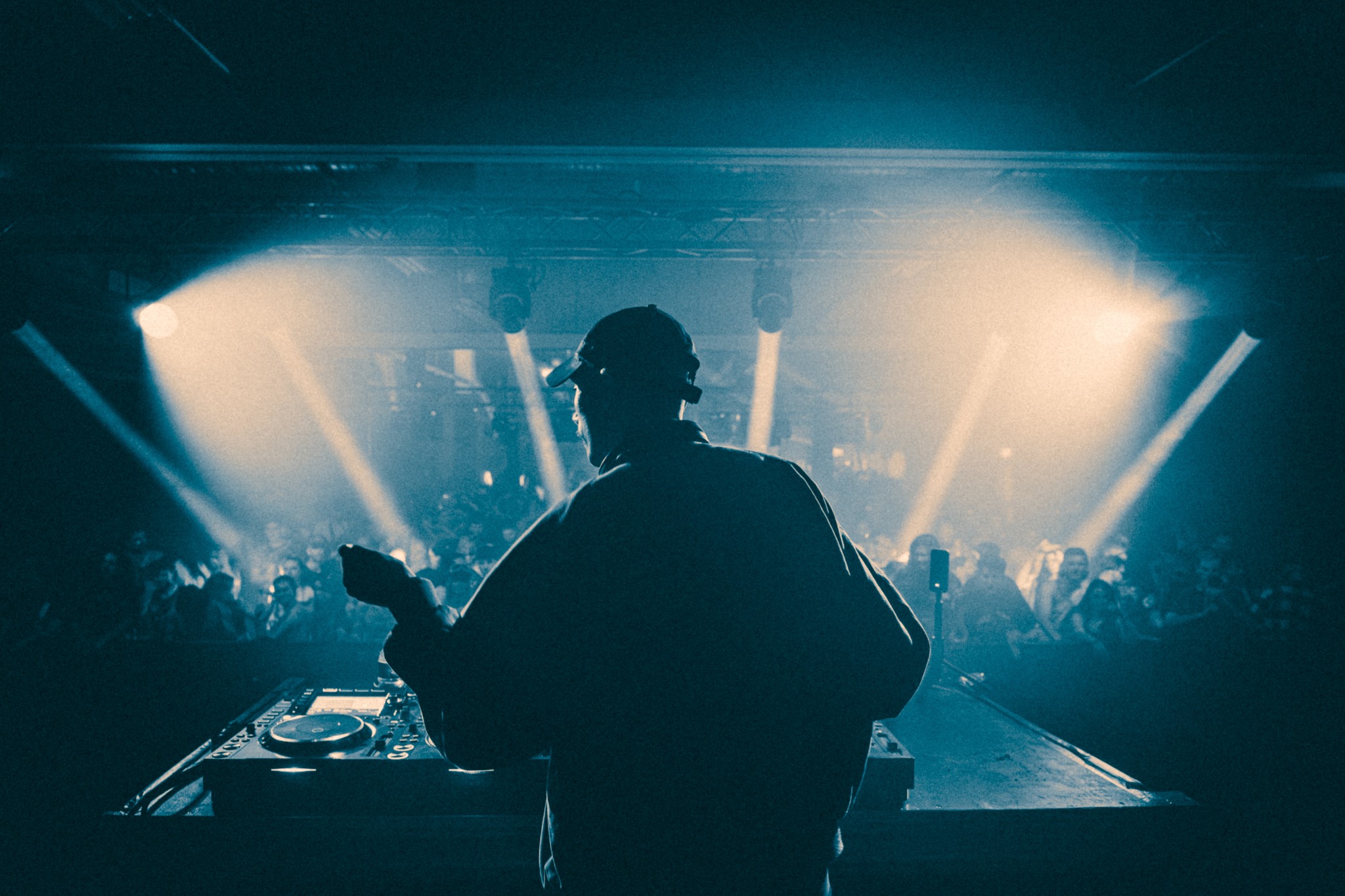
DJ SETS / PERFORMANCES / WORLDWIDE
DJing is a space for sharing, listening and collective construction. Selection, progression and attention to the room are part of the act of creation.
“To me, DJing is the art of finding the right balance between meeting expectations and making space for the unexpected.”— umbraidBOOKING EPK / AVAILABILITY ↗
NOTES ON CREATION / LISTENING / TECHNOLOGY
Why do some works transform us while others disappear from our memory almost immediately?
From experience, four fundamental gestures emerge: search, inhabit, open and share.
The gestures were almost the same. The landscape was no longer the same. A personal 24-quarter-tone system became a way to leave recognition behind and make listening available again.
“I had not changed ears. I had changed maps.”
The drop turns music into waiting: tension, promise, release. Trance offers another relation to time. Nothing needs to arrive because the listener is already inside.
The drop isn't “bad.” It's simply built on one of the oldest principles of Western music: tension and release.
Whether it's a verse leading into a chorus, a dominant chord resolving to the tonic, a crescendo reaching its climax, or an EDM build-up exploding into a drop, the mechanism is the same: create expectation, delay gratification, then reward the listener with a burst of dopamine.
This has shaped centuries of Western music—from Renaissance polyphony to Classical symphonies, from pop songs to modern dance music.
But trance belongs to another tradition.
It is older than genres, older than harmony, perhaps as old as humanity itself. Its purpose isn't to constantly create expectation. It doesn't ask, “What happens next?”
“Can you stay here?”
For me, this is the difference between consuming music and inhabiting it.
A drop pulls you forward. It tells you that the present only exists to prepare for what comes next.
Trance does the opposite. It invites you to remain inside a sound long enough for your perception to change. Repetition isn't there to delay the climax—it is the place itself. A space to inhabit rather than a bridge to cross.
That's why I'm no longer interested in music built around peaks.
I'm interested in music that becomes a place.
Not music you wait for.
Music you inhabit.
The democratisation of DJing prepared the public for a culture in which selecting, combining and presenting can be mistaken for producing. Generative music intensifies that ambiguity.
Long before a prompt could generate a song, DJ culture had already taught audiences to recognise selection, combination and presentation as creative acts. It also taught us how easily the gesture of creation can become detached from the labour that produced its material.
A DJ can produce an extraordinary public result without having composed any of the tracks being played. The recordings may represent years of other people’s writing, sound design, engineering, performance and financial risk. Yet in the room it is the DJ who occupies the visible position of authorship. The crowd experiences the set as their work.
This does not mean DJing is effortless. Listening deeply, searching, selecting, sequencing, understanding a sound system and reading a room are real practices. A transition can alter the meaning of two tracks; a patient progression can change the emotional scale of a night. Attention to the public is not outside the creative act. It is one of its materials.
But the form complicates a familiar equation: the person who presents the experience is not necessarily the person who made its components. DJing makes authorship relational. It distributes creation across producers, labels, scenes, technologies, venues, listeners and the performer who activates these elements at a particular time.
“The DJ did not invent the sounds. The DJ invented the relation between them — and between them and us.”
During the rise of DJ culture, this distributed authorship became ordinary. Sampling and remixing had already challenged the ideal of the artist creating from nothing. The DJ went further: the material could remain almost entirely recognisable and still become part of a new statement through context, order, timing and address.
Nicolas Bourriaud used the term postproduction to describe artists who navigate and reprogramme existing cultural forms. DJing is perhaps the clearest popular image of that condition. Roland Barthes had shifted meaning away from the sovereign author and toward the reader; Michel Foucault described the author as a function that organises how discourse circulates. On the dancefloor, those ideas stop being abstract. Meaning is produced through use, placement and reception.
Walter Benjamin argued that technical reproduction changes the status of the artwork. Club culture adds another transformation: reproduction becomes performance. A record is copied, distributed and played, but in the set it also becomes an event whose meaning depends on what surrounds it and who is present. The recording is stable; its social life is not.
As equipment became cheaper and music libraries became digital, the threshold for becoming a DJ fell. This was productive. More people could build scenes, share discoveries and speak through music. Technical scarcity lost some of its power to decide who was allowed to perform.
It also shifted public attention from production to result. If the room works, the labour behind the source material is easy to forget. The person framed by the booth receives the immediate recognition; the producers whose tracks make the night possible are often invisible. A culture of access can thus coexist with a culture of extraction.
Over time, audiences learned to accept a simple proposition: one can be the recognised author of an experience by choosing and arranging things made by others. We learned to judge the intelligence of the selection, the precision of the sequence and the force of the result. We became comfortable with authorship as interface.
“The prompt did not invent authorship at a distance. The booth had already made it familiar.”
Generative AI music enters through this opening. The user no longer selects finished tracks but words, references, parameters and preferred outputs. The system performs a hidden synthesis across an enormous field of prior musical labour. The gesture remains small while the public result can sound complete.
That imbalance feels new because the machine is new. Culturally, however, we have rehearsed it for decades. We already know how to admire the person operating the interface. We already accept that taste, choice and presentation can carry the status of creation. We already live with the distance between the visible performer and the invisible people whose work supplies the material.
This is not an argument that DJing and generative AI are identical. A DJ responds to a room in real time, participates in a scene and normally works with identifiable recordings that can be credited and bought. A generative model may absorb its sources into a system whose provenance is difficult or impossible to perceive. The scale, opacity and economics are radically different.
The comparison matters precisely because of that difference. DJ culture gives us language for asking where transformation becomes authorship, when selection becomes extraction, and which forms of labour disappear behind a fluent performance. It also shows that these questions cannot be answered by measuring physical effort alone. A minimal gesture can contain years of listening — or conceal years of other people’s work.
The useful question is therefore not whether choosing is “really” creating. Choosing changes meaning; sometimes it changes culture. The question is what kind of relation that choice establishes with its sources. Does it make them audible or erase them? Does value circulate back toward the people whose work made the result possible? Can the audience understand what has been transformed and by whom?
DJing at its best does not hide dependence. It declares it. A set can be a form of public listening, a network of references, a way of carrying music from one person to another. It can turn appropriation into attention and attention into support. Its ethics are not guaranteed by the medium; they have to be practised through credit, curiosity and reciprocity.
Generative music will also be judged by the relations it constructs. The decisive issue is not whether a machine participated, but whether the system turns musical culture into anonymous fuel or allows creation to remain a form of exchange. Technology changes the gesture. It does not remove responsibility from the person who makes the gesture.
DJing prepared us to recognise creation in the act of selection. Generative AI asks what happens when the selected material disappears inside the instrument. The answer will depend on whether we are satisfied with the result — or remain capable of listening for everyone inside it.
IDENTITY / CONTACT / EXTERNAL LINKS
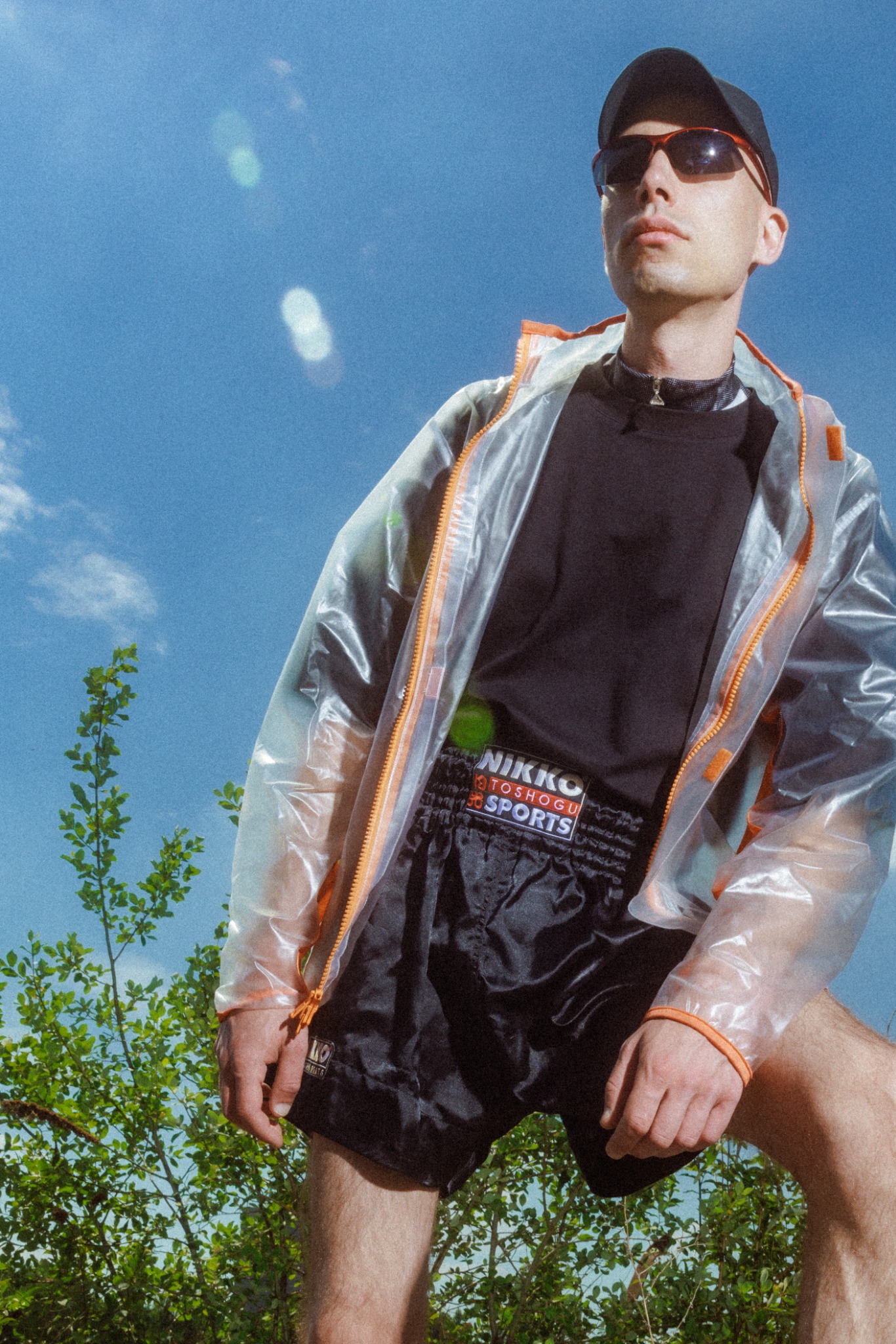
Founded in 2018 after studies in classical guitar, composition and musicology, umbraid exists at the crossing of techno and trance, nostalgia and futurism.
His productions have been supported by Anetha, KI/KI, MAMA SNAKE, SPFDJ and VTSS. He has performed across Europe, the Americas and Australia, while developing collaborations with dance, fashion, video and visual arts.
With close to one hundred released works, his music has generated tens of millions of streams.